

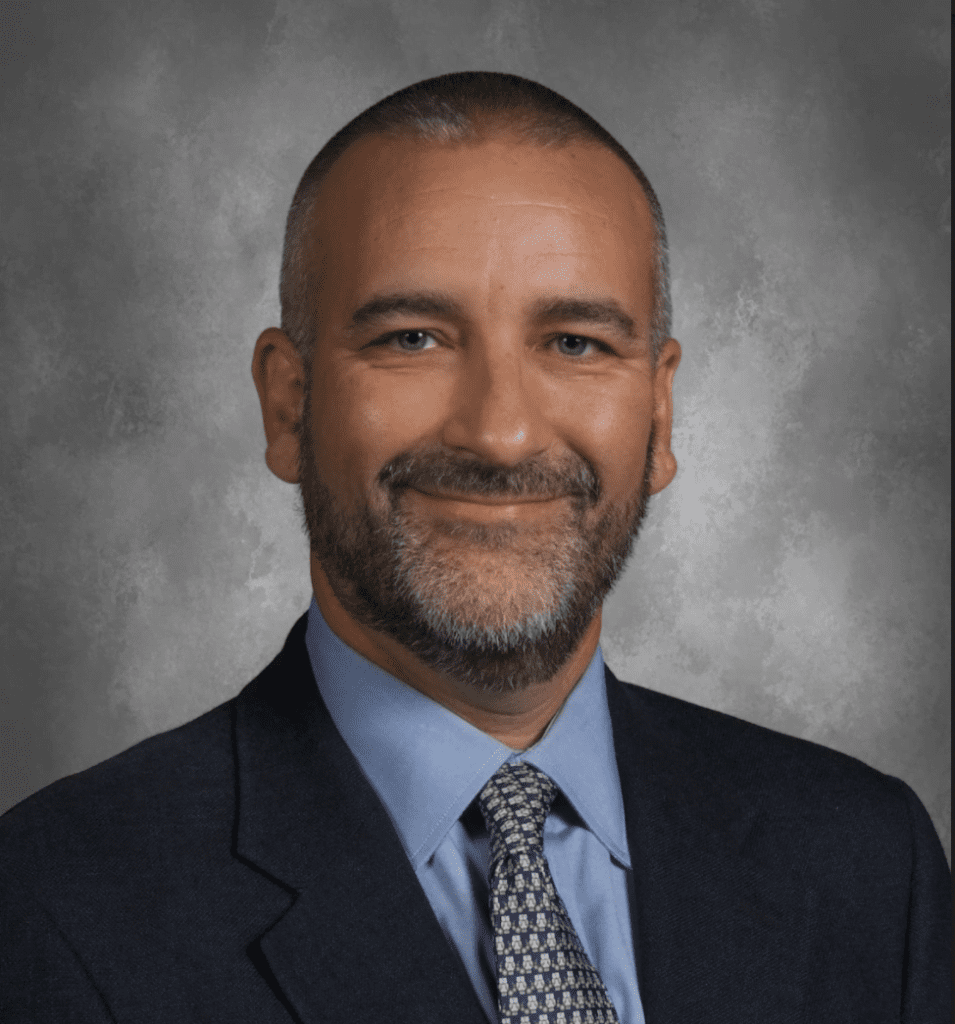
Jason Coady, Teacher & Director of Community Service, The Hill School
During the opening session of the gcLi Symposium on Building Cultures of Leadership, Dr. Ted Fish, Executive Director, highlighted the two core elements of gcLi’s culture: collaboration and feedback. Those of us who have attended the Leadership Lab know how fundamental both these elements are to the experience. We can also all agree, though, that Dr. Fish left out a critical third element of the gcLi culture: drinking from a firehose.
Every Leadership Lab graduate can describe the way the gcLi faculty seek feedback and work together effectively. Every graduate can also recall the relentless onslaught of information that they tried hard, though not always successfully, to keep up with. As we have all come to learn, drinking from a firehose is exhausting, fun, and messy, but once you’ve done it successfully, you can’t wait to do it again. Once you’ve done it for a while you learn how to see patterns within the flow that help you do it even better.
I went to the Symposium because I had drunk from the firehose before and wanted more, and I am happy to say I was not disappointed. The exhaustion and the fun of experiencing the two-day symposium came as no surprise. Trying to keep pace with all the information and absorb all the wisdom and research-based findings of a group of brilliant, inspiring researchers and educators will inevitably wear you out. At the same time, as lifelong learners, we all take pleasure in embracing a challenge, thinking deeply about new ideas, and imagining what these ideas could look like at our own schools.
The messiness of experiencing the two-day symposium also came as no surprise: you can’t absorb that much information that quickly without running into confusion, conflict, and contradiction. That, though, is precisely what’s so great about the firehose: the things that make it messy are the things that force you to dig deeper, and when you do, you begin to see the patterns within the chaos that resonate for you and show you a way forward.
Consider, for example, Dr. Annie McKee’s opening keynote address. In it, she proposed that we should focus on our strengths to grow as leaders. Dr. JoAnn Deak, in her own keynote the following morning, disagreed. She argued that strengths are important but that when we encounter something that’s hard, that’s our brain telling us we have an opportunity for growth and that focusing on our strengths might steer us away from these opportunities. For me, the conflicting opinions led initially to confusion: how can we help our students learn to focus on their strengths, while also embracing opportunities for growth? Through this conflict, I noticed a pattern: much of what they were talking about is related to the research on strengths in the field of positive psychology. I was excited to make this connection because some of my colleagues and I at the Hill School have been working to bring a greater focus on strengths to our work with students, and the insights Dr. McKee and Dr. Deak provided helped me see new ways to think about this work.
 Author: Jason Coady
I found similar inspiration in a contradiction between my own experience and research shared by Kelsey Schroeder. In her breakout session, she discussed the importance of having powerful female role models for girls who are developing as leaders. This lines up with my own experience, but also runs counter to it. At Hill, we primarily have female role models for our freshman girls and male role models for our freshman boys, and the result is that the students only identify members of their own sex as leaders at the school. How can we reconcile the need to have positive same-sex role models with the need for students to see that leadership isn’t about one’s gender but about what a person does when put in a position to lead? Thinking through this contradiction, I realized that our students need both. They need role models of the same gender, and they also need to be encouraged to look beyond leadership titles. Just because someone is not a freshman student’s assigned mentor doesn’t mean that they cannot serve as leadership role models. Examining our culture at Hill to see how we can begin to liberate students from the idea that leaders must have titles will be an important step for us.
In reflecting on my experience, something occurred to me: “drinking from a firehose” isn’t just a metaphor for how we’ve learned about the pedagogy of leadership at gcLi events, it’s a metaphor for leadership itself. That is to say, leadership means being exhausted while having fun trying to take in and process the needs of the individuals, the group, and the leader himself. Leadership is looking for patterns within the chaos, and it is identifying the things that resonate with the group. It is gathering seemingly contradictory information, considering it, making a decision, and then proceeding in a way that seems best for those involved. Good leaders are those who have learned how to drink from a firehose.
I left the symposium with pages and pages of notes, recommendations for a half-dozen articles and books to read, and big ideas about defining our own leadership culture and building it, as Dr. Fish described, layer by layer. Beyond all those big ideas, beyond all those resources and concepts, though, there is this: for too many years we have been doling out leadership experiences for our students in small, controlled chunks. We ask them to lead but we are always careful to never let them get too overwhelmed. This approach is fine, and we’ve graduated plenty of successful leaders, but after the symposium, I’m ready to try something new. Instead of controlling the flow, I think it’s time to open things up and let our students have their own experience at the firehose. Some will struggle and some will thrive, but all will learn and grow from the experience. We have learned the value of collaboration and feedback as core elements of successful leadership, but we have also learned that real growth happens when we look at a challenge that feels too big, too overwhelming, and do our best to make sense of the confusion, conflict, and contradiction. I have come to love drinking from the firehose, and I think it is time to share that love with my students.
Jason Coady is in his nineteenth year of teaching, the last fourteen of which have been at The Hill School in Pottstown, PA. As with any independent school teacher, he wears many hats, including mathematics instructor, dormitory head, Director of Community Service, and Student Leadership Programs Coordinator. He has been working to create a leadership development program at Hill and will share some of his efforts at the NAIS Annual Conference in March 2018.