

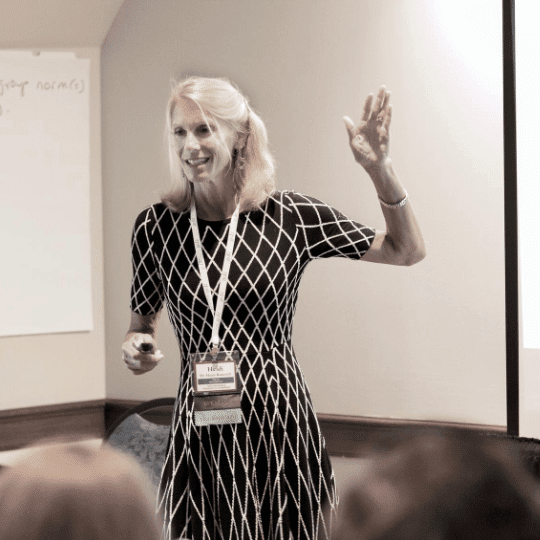
Founder of Kase Leadership Method, Dr. Kasevich is a Leadership Educator and Coach. A national keynote speaker, she is passionate about helping adults and students alike use self-awareness to optimize their ability to lead in today’s world. Her work as Educational Director at Quiet Revolution has been featured on NPR and in numerous publications, including Huffington Post, New York Magazine, and Harvard Magazine.
Her proficiency is grounded in over 20 years of experience as a history and leadership educator, and leadership program designer and history chair at several secondary schools and universities in New York City. During this time, she authored various curricula, including Guide to Giving, a highly-acclaimed K-12 philanthropy curriculum, and Closing the Gap, an influential girls’ leadership curriculum.
She is the co-author of The Introverted Actor: Practical Approaches (July 2020), which provides educators and directors with methods to create inclusive acting environments where the strengths of the introverted actor are as valued as their extroverted counterparts. Heard: Understanding How Introverted Students Learn and Lead, a research-based, temperament-inclusivity book designed to provide actionable strategies for K-12 educators, is forthcoming in 2021.
A proud gcLi alumnus scholar, she received her B.A. from Haverford and Ph.D. from New York University.
This interview has been edited for clarity and length and will appear in two installments on the gcLi blog.
Origins
Kate Wade (Editor, gcLi Leadership Blog):
Thank you so much for spending time with us, Dr. Kasevich! You’re in the process of writing two books about introvert inclusivity for a K-12 educator audience. How did you become so passionate about this topic?
Heidi Kasevich:
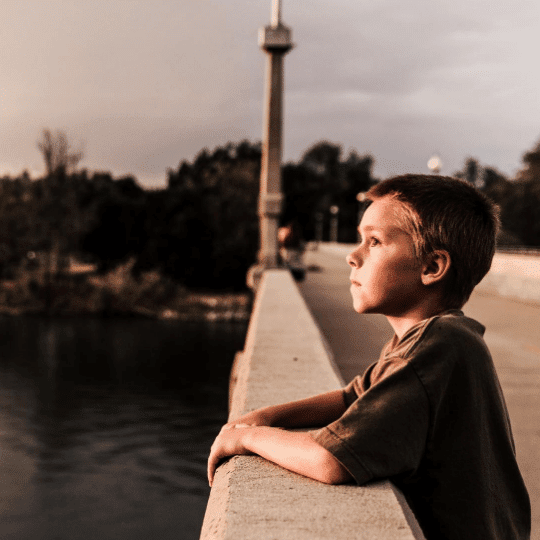
I’m going to take you back a few years. When I was young, I felt an enormous amount of pressure to just speak up. Some of my most traumatic memories involve loud Halloween parades, group work in middle school English classes, or the dreaded high school public speaking class. Being popular was tied to being outgoing and spotlight-loving. That was really not me. There was no way I could ever contemplate taking on a leadership role with my quieter nature, and that always made me sad.
So fast forward, during my years as a middle and high school history and leadership educator, I used to tell my students in my classes there would be no fear of “just coming out of your shell,” or that being quiet did not mean that you were not normal, or even worse, any of the common misperceptions affiliated with introversion, such as being antisocial, slow, not ambitious, aloof, uncharismatic, and dare I say, even a party pooper. In my classes, silence did not necessarily connote compliance, insecurity, boredom, or resistance, which by the way they could, but not necessarily. It became my mission as an educator to draw out the quiet ones slowly but surely, while still honoring their strengths.
Now my focus is on writing and getting the word out, and I’m motivated by several serious concerns seen in our schools and universities today. From hundreds of interviews that I’ve conducted with students and teachers around the country, I found that introverts of all ages feel misjudged, overlooked, and undervalued. We often define participation as quantity of speech, assigning a grade to the number of times a kid raises their hand in our classes. Often a teacher pauses just one second before calling on the first student. Research shows that talkative people have been rated as smarter, better-looking, more interesting and more desirable as friends. For me, it was never quantity, but quality of speech that mattered.
Our schools tend to be crowded, noisy places, when we can attend them, where the walls have come down, so that it can be hard to find a place for privacy. There’s an expectation for constant social interaction, as collaboration and group work dominate our teaching and learning experiences.
KW: So, how do these conditions affect introverts?
HK: “I’m exhausted,” is a phrase that I’ve often heard from teachers and students alike. Research has shown that about 41% of public school teachers leave the profession after the first five years of entering it, because they are simply exhausted, burned out. And, the spotlight-loving emphasis in our schools? Studies show that there is an enduring and strong cultural bias towards dynamic, gregarious and alpha leaders, so-called extroverts, and the extrovert ideal, which in turn offers us charming, charismatic, outgoing, action-oriented school leaders. Perhaps a helpful little history lesson: this ideal has also been connected to the rise of the industrial and media ages. You couldn’t succeed in life unless you were a fast-talking salesman, and I do say sales man.
So, to your question about my motivation. It really is under the largest theme possible; it’s burnout. Burnout is a real physical and emotional response that derives, typically for our introverts, from the lack of quiet times and spaces in our lives, and from the pressure to fit into a one-size-fits-all definition of what it means to be successful. Leadership becomes very important, so does this idea of extroverting if you’re an introvert, or self-monitoring, if one can do this in a healthy way. But if it becomes excessive, studies have shown that students and also adults can experience depression and anxiety. So it’s really a version of peer pressure. “I’m not normal,” is what I’ve heard from a lot of introverted students who just feel like they don’t fit in, and then who go to great lengths to try and do so. Of course, our adolescents are at great risk, because part of who they are is wanting to fit in.
KW: How else is this limiting for us? How are we especially now putting restrictions on ourselves because of this model that we’re stuck in?
HK: I am 100% committed to helping educators to broaden definitions of leadership and to help them identify where the extrovert ideal might actually exist in their schools. So honestly, because this is where unconscious bias can come into play, we don’t really know. We don’t notice. As in: “Wait a minute. All of our student council leaders fit that mold. You know, they are spotlight-loving, and they are outgoing, and they are gregarious, and they are action-oriented, dynamic individuals.” And, frankly, there’s nothing wrong with that more extroverted-style leadership. However, there is an enormous need to open it up so that those who are more temperamentally introverted may also take the stage, the podium. I’m a great advocate of honoring one’s authentic self and understanding what that means, and then stretching or stepping outside of your comfort zone to do things that are a little bit more difficult, that might not come naturally. It is absolutely possible, and can be completely comfortable when scaffolded correctly, to help a more introverted leader, to take to the podium. I think we just need to scaffold those stretches.
Understanding The Introvert/Extrovert Spectrum
KW: The idea of scaffolding that stretch…in your book Heard, you refer to the diversity of nervous systems. You talk a little bit about the biological foundations of introversion and extroversion, and it feels like what we’re talking about is connected to that.
HK: Yes, absolutely. And so I, as does gcLi, believe that leadership is rooted in self-awareness. When I became aware of the power of temperament, particularly understanding one’s self through the introvert/extrovert lens, it was a game-changer. This was really only about five years ago. I mean, I honestly didn’t really understand that I am an extreme introvert, and that I also happen to love to stand at the podium, and to stand up in front of a class. That’s actually completely normal.
But as I said, it was a game-changer and I didn’t know. And so it has become my mission to help educators and students understand what it means to be more introverted or more extroverted, or where you fall on what I call the I/E spectrum. And, yes, it is definitely a spectrum. This knowledge, this self-knowledge, the self-awareness, is meant to set you free, not put you in a box. And I should add that about 40 to 50% is who we are in terms of how we were born –the rest of us is who we want to become. So adaptability is also a trait, which is why I always emphasize that we have fixed traits and we have free traits, and they coexist. That’s where the comfortable stretching comes in.
KW: So, how do you teach students to be temperamentally self-aware?
HK: Well, there are many ways to do it. We can do online personality tests. We can do self-awareness cubes, depending on the age of the children. I love this approach with the younger sets, and honestly, it needs to be done patiently, and it needs to be rooted in self-awareness work that’s already been done by those teaching it. I also believe that you fundamentally need to put on your own oxygen mask first, so we’re also starting with helping educators have a handle on these terms so there aren’t misconceptions. We can often, for example, conflate introversion with shyness. Fundamentally, introversion has to do with our sensitivity to stimulation from the outside world – social and sensory stimuli. An introvert can hit overload if they have too much input from the outside world. That could be group work. That could be bright lights. That could be noise. That could even be caffeine.
Actually one of my favorite little tests, and something that’s fun to do, is literally to slice a lemon. This goes back to a Hans Eysenck test from 1967. Slice a lemon and eat it. Kids love this, and ask, what’s my toleration factor of this stimulant? It probably comes as no surprise that extroverts can chomp on the lemon and think it tastes good. For introverts, it just doesn’t. It feels tarter. Now, not all researchers are totally behind this test. I think it’s super fun, and like I said, kids really love it.
KW: It gives you a way in to at least introduce the vocabulary and the framework to younger students, to help them develop their sense of self and awareness.
HK: Yes, yes. And I love pair work, and utilize the think/pair/share framework as we’re working through various aspects of what it means to fall in that spectrum. So introversion/extroversion fundamentally has to do with stimulation. That affects various preferences. This is also the way we can talk about it with our kids, so the sensitivity piece is connected with the way we need to recharge. If you’ve taken in too much stimulation from the outside world, you, as the introvert, will want to recharge in solitude and really enjoy quiet times. A common misperception is that introverts are not social, which is not true.
So the very binary – introverts turn inward, extroverts turn outward to get your energy, inward versus outward – is not fully true. Introverts like to socialize. They socialize differently. They prefer one-on-one interaction to large-group interaction, based on that stimulation. It makes sense. Introverts do like parties. They’re actually not party poopers, but they might want to have an exit strategy. “I’ve got to get out of here after two hours, because I’m just going to be over-stimulated and tired,” so we talk about recharging, and we talk about working styles.
Once kids understand this too, it opens up their world. “So I actually prefer to work in solitude, in quiet. I get distracted easily, as an introvert.” An extrovert might need a lot of noise, and this comes up all the time in school environments. I also want to go back to the recharging piece, because I don’t want to leave out the extroverts. When we talk about a recharging style, the extrovert also needs to understand that their recharging style is going to be quite different. After a long day at school, they may actually feel ready for more activities, or want to stay at that party later. In the end, it really has to do with that amount of stimulation that one can take from the outside world.
Understanding the social style preference is critical. Because often, those who are more introverted may feel “less than” compared to their extroverted peers who might be able to handle really large networks on social media. Like, “Yeah, I have 500 friends, and actually I stay in touch with all of them” thing. I think the social media piece is important, too. Introverts really tend to have a smaller core group of friends — one, two, three close friends and that’s their comfort level in terms of social styles, and that’s okay!
Introvert Misconceptions
KW: It feels like perhaps there’s a sense of self-judgment as an introvert: if I’m not acting in this way, or if I’m not super connected on social media, or if I need to go home and recharge. In Heard, one of the things that you’re trying to do is really peel back the confusion and the misconceptions and say, “Actually, this is equally valid.” It’s incredibly important to understand this, because this is 50% of all of us.
HK: Yes, it’s just so exciting when you see that kids who have been trained in this self-awareness work are truly able to connect with one another. “Oh, so you’re not being antisocial. You are recharging. You are not shy. You’re an introvert.” Shyness is often a very painful experience whereby one is afraid of social judgment, how others think about you. Whereas introversion fundamentally has to do with your sensitivity to stimulation from the outside world, so they are not the same. One major concern of mine is when students are labeled as shy or are told to, “Just come out of your shell,” or, “Just speak up.” That that pressure can actually backfire. You can add layers of shyness to introversion, and I’ve seen it, and I know that it is quite painful.
KW: And the damage that can be done! I’m thinking about myself as an educator in the classroom, and really if I’m being honest with myself, how often have I said, “We want to hear more from you,” or, “Can you please speak up?” And how as a teacher, what you outline in Heard is going to be critical to my practice because not only are you offering your audience the language and the framework to understanding, but you’re also giving very real examples of how this plays out in schools. I would love to hear a little bit more about what you learned from writing Heard, and particularly about the importance of recharging.
HK: We have the innate core that is our biogenetics, how we take input from the outside world. And I should also add that there’s one other component to introversion and extroversion which has to do with our sensitivity to rewards in the environment. This is also a game-changer when kids understand it. So very simply, our sensitivity to rewards is connected to the neurotransmitter dopamine in our brains, and long story short, dopamine is the reward chemical released in response to anticipated pleasures. The dopamine pathways are more active in the brains of extroverts than introverts. Introverts can have them too, but extroverts often get this good feeling at the expectation of a bigger reward in the environment, and this is so critical for our kids. So for the extrovert, when they raise their hand very quickly and process out loud, one of the number one rewards is social attention.
Research shows that that’s going to give that bubbly buzz to an extrovert, and an introvert is not going to have that same charged feeling, and will want to process, take time to think before speaking. I’ve seen it so many times, and there are so many miscommunications and misunderstandings on teams, where by the way, research shows that in a group of six to eight, it’s three people who are doing about 70% of the talking. We’ve all seen that as educators.
KW: I’m realizing that there’s both the “time space” in the back and forth of communication and then there’s also a need for physical space for recharging. Has that been something that you’ve been researching?
HK: Yes, absolutely. There is a great need in schools across the nation to build in quiet times and spaces, even a calmer zone in the cafeteria. Cafeterias tend to be very noisy, a lot of activity. It could be just the corner of the classroom, where you have a license to be silent, where you’re not being stereotyped as being a loner or being aloof. Introverts need to get that critical recharging during their day. Then when we’re teaching, and this is another section of Heard, embrace the art of the reflective pause. I’ve determined it’s an art form, and think of it as such. We can build in time to think for our introverts in so many different ways. It can even be as simple as pausing yourself as an educator, perhaps seven to ten seconds before calling on anyone. I like to say, “Hands down. We’re not even going to raise our hands. We’re going to have a different dialogue.” Obviously, we can bring students in. We can pause and have metacognitive moments in the middle of our sessions. We can encourage written feedback. We can use all sorts of other reflective pausing strategies, and that is a really important part of what I’m trying to offer: practical tools to educate everyone on the Introvert/Extrovert spectrum in our classrooms.